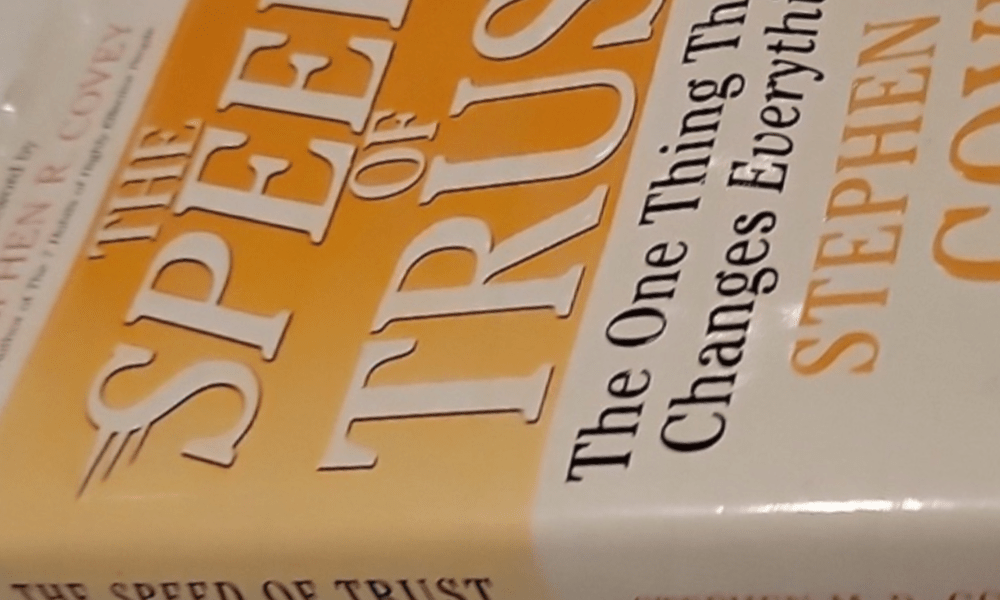
I got around to reading The Speed of Trust this summer. It’s one of those books that I’ve heard people reference for years, but for some reason, I never picked it up.
I’m glad I did.
The basic premise is simple: when people trust each other, everything moves faster. When they don’t, everything slows down.
As with many of the things I read, my mind immediately went to education.
Every year, we ask teachers to try something new. We ask students to take risks. We ask parents to believe we’re making decisions in the best interest of their kids. All of those things require trust. Sometimes a little. Sometimes a lot.
Covey argues that authentic trust isn’t built during the big decisions or milestone moments. It’s built through hundreds of small interactions.
It’s returning a phone call when you said you would.
It’s admitting you made a mistake.
It’s assuming good intentions.
It’s following through.
It’s telling someone something they need to hear, even when it’s uncomfortable.
None of those moments seems especially significant on its own, but together they become the foundation of trust.
One idea from the book that really stuck with me is that trust comes from both character and competence.
If someone is kind and honest but never follows through, eventually you stop trusting them. On the other hand, someone can be incredibly capable, but if you question their motives, trust disappears just as quickly.
You need both.
That made me think about my own job.
I spend a lot of time thinking about relationships and culture because I genuinely believe schools are built on relationships. But relationships aren’t enough if people can’t count on you to do what you say you’re going to do.
As another school year is just a few weeks away (yikes!), I find myself asking this question:
How do we become a school community that trusts each other just a little bit more?
Because I think that changes everything.
Teachers are more willing to share ideas. Students are more willing to admit they need help. Parents are more willing to give us the benefit of the doubt. Hard conversations happen sooner. People spend less time protecting themselves and more time solving problems.
Leadership is sometimes really hard. The longer I do this work, the more I think it’s less about having the right answers and more about creating the kind of relationships where people are willing to work through difficult problems together.
Isn’t that what trust really looks like?
Not believing someone is perfect.
Just believing they’re for you.
 Mr. Zerwas