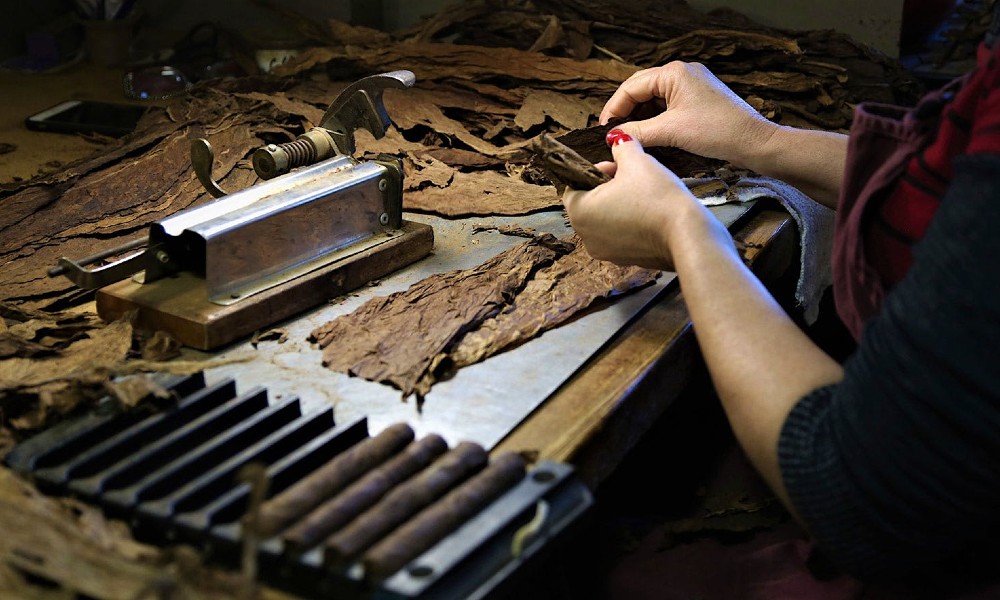
My wife recently shared a podcast episode with me from one of her favorite shows: Atlas Obscura. The episode was on something called Cigar Readers (or Lectors), and it was absolutely fascinating. In the 1800s in Cuba, with around 500 cigar factories in Havana alone, a tradition/movement arose of having a reader in each group. In the middle of a huge, echoing space full of tobacco leaves and wooden benches, a single voice reads aloud. Sometimes it’s a novel. Sometimes the newspaper. Sometimes poetry or political theory. The audience listens intently as they roll cigars by hand.
That voice belongs to the reader, a role that dates back to the 1800s. It started as a way to break the monotony of factory work, but over time, it became something more. A source of education. A catalyst for community. And, in many cases, a quiet form of resistance.
In our age of podcasts, streaming, and multiple screens within an arm’s reach, it is easy to forget how powerful a voice can be. But these factory readers remind us. They remind us that knowledge does not need to be packaged in high-tech tools. It can travel across a room. It can stir thought in the middle of a workday. It can bind people together in a shared story.
The lector tradition in Cuba is also about ingenuity. Most of the readers are chosen by the workers themselves. The material reflects what people care about. It informs. It inspires. It sparks conversation. In a place where open discourse has often been restricted, the voice of the reader became something more than just sound. It became a thread of autonomy. A way to stay awake to the world.
And it built something rare. These factories became learning spaces, cultural centers, and mini communities of resistance. In between cigars, people talked about labor rights. They debated characters in novels. They passed ideas from one end of the room to the other. Literacy rose. So did solidarity. In fact, the Cuban government, at one point, outlawed reading in groups!
Sometimes the most innovative things are not new. Sometimes they are old practices, sustained by people who believe in their value. In a world obsessed with speed and scale, the lector reminds us of a slower kind of progress.
I think about what this might mean in schools, in teams, in community spaces. What if we thought of learning not just as content delivery, but as a shared listening experience? What if we used our voices more often to inform, challenge, connect?
Sometimes the most revolutionary thing you can do is keep reading aloud.
 Mr. Zerwas Teaches Here